
Preparing for Your Annual LEW Inspection: A Compliance Checklist
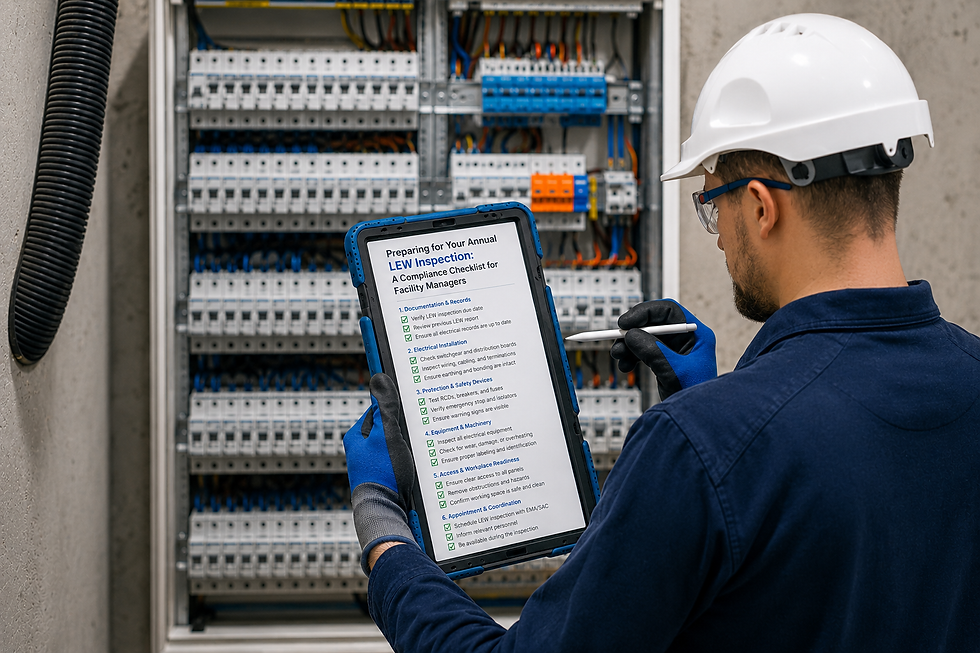
Facility managers must prioritize electrical safety. A well-maintained electrical system protects personnel, ensures operational continuity, and maintains full regulatory compliance.
Conducting an annual electrical inspection in Singapore is essential for building safety and reliability. Regular audits help identify vulnerabilities early, ensuring electrical infrastructure operates safely under normal loads.
Delaying inspection preparation often causes administrative bottlenecks, missing documentation, and unnecessary repair delays. Utilizing a structured checklist year-round streamlines the inspection process. This guide outlines key preparation steps before your Licensed Electrical Worker (LEW) arrives.
Why Annual Electrical Inspections Matter
Electrical systems experience wear over time. Components age, equipment usage changes, and environmental conditions can affect performance. Without regular inspections, small defects can develop into major safety hazards.
An annual electrical inspection in Singapore helps identify problems such as damaged cables, loose connections, overloaded circuits, and equipment deterioration before they lead to failures.
Regular inspections also offer several benefits, including:
Improved workplace safety
Reduced risk of electrical fires
Better equipment performance
Lower maintenance costs
Fewer unexpected power outages
Stronger regulatory compliance
Most importantly, inspections give facility managers confidence that their electrical systems remain safe and dependable.
Electrical infrastructure degrades over time. System aging, shifting operational demands, and environmental factors can compromise equipment performance. Without routine evaluations, minor defects can evolve into major hazards.
An annual electrical inspection in Singapore pinpoints issues—such as damaged cables, loose connections, overloaded circuits, and component deterioration—before system failure occurs.
Key benefits of regular inspections include:
Enhanced Workplace Safety: Reduces electric shock and occupational hazards.
Fire Risk Mitigation: Detects thermal anomalies and wiring degradation early.
Optimized Equipment Lifespan: Maintains efficiency and delays capital replacement costs.
Minimized Unplanned Downtime: Prevents unexpected operational disruptions.
Regulatory Compliance: Ensures adherence to local statutory requirements.
The Role of a LEW Inspection
A Licensed Electrical Worker conducts rigorous assessments to verify that installations conform to current safety standard codes.
A standard inspection encompasses:
Visual assessment of overall electrical infrastructure
Physical and diagnostic testing of electrical equipment
Calibration and verification of protective devices
Evaluation of system earthing and bonding integrity
Review of operational logs and historical maintenance records
Identification of immediate and potential safety risks
Beyond basic regulatory compliance, a LEW audit provides actionable insights to enhance your facility's long-term electrical reliability.
Proactive Inspection Preparation
Effective preparation begins months before the scheduled audit. Rather than rushing during the final week, maintain up-to-date maintenance logs and resolve minor defects promptly throughout the year.
A proactive strategy allows ample time to execute required repairs before formal testing begins.
Annual LEW Inspection Compliance Checklist
The following checklist can help facility managers prepare with confidence.
1. Review Previous Inspection Reports
Revisit your previous LEW audit report to confirm that:
All outstanding recommendations have been addressed.
Identified defects have been fully remediated.
Items flagged for continuous monitoring are logged.
Corrective action records are fully documented.
All required corrective actions have been successfully executed.
Keeping a record of completed work demonstrates responsible maintenance practices.
2. Organise Maintenance Documentation
Keep critical technical documents centralized and accessible for the inspector, including:
Preventive maintenance schedules and logs
Service and repair history
Single-line diagrams and updated electrical drawings
Equipment operation manuals and testing certificates
Well-organised records allow inspectors to efficiently assess the condition of your electrical installation.
3. Check Switchboards and Distribution Panels
Electrical panels should remain clean, accessible and clearly labelled.
Inspect for:
Loose covers
Missing labels
Signs of overheating
Corrosion
Dust build-up
Water leaks
Do not store boxes, equipment, or materials in front of electrical panels. Unobstructed access ensures both site safety and inspection efficiency.
4. Inspect Electrical Equipment
Walk through the facility and visually inspect electrical equipment.
Pay attention to:
Damaged sockets
Broken switches
Exposed wiring
Burn marks
Unusual noises
Loose cable connections
All identified defects, including minor issues, must be rectified through professional commercial electrician prior to the formal inspection.
5. Verify Emergency Systems
Emergency electrical systems should always remain operational.
Check the condition of:
Emergency lighting
Exit signs
Backup power systems
Generator connections
Uninterruptible power supplies
Routine testing helps ensure these systems perform correctly during an emergency.
6. Review Earthing and Bonding
Proper grounding mitigates shock hazards and equipment damage:
Visually inspect exposed earth conductors and ground bonding straps.
Ensure ground clamps and connections remain tight and free of corrosion.
7. Test Protective Devices
Protective devices are designed to isolate faulty circuits rapidly during an electrical fault.
Common protective devices include:
Circuit breakers
Residual current devices (RCDs)
Protective relays
Fuses
Routine inspections and functional checks confirm that these devices operate as intended.
Following equipment upgrades, facilities must conduct Licensed Electrical Worker (LEW) testing and commissioning to ensure protective systems function correctly prior to re-energisation and returning installations to service.
8. Prepare for Mandatory Electrical Testing
Facilities must conduct mandatory electrical installation testing to verify system integrity and safety compliance.
Essential testing scope includes:
Insulation resistance testing
Earth continuity testing
Earth fault loop impedance testing
Functional testing of protection systems
Proactive preparation of equipment minimizes inspection delays.
Site management must ensure unimpeded access to all relevant electrical rooms and distribution equipment prior to testing.
9. Update Electrical Drawings
Electrical layouts frequently change following facility renovations or equipment upgrades.
Confirm that:
Single-line diagrams are up to date
Circuit identification is accurate
Physical equipment labels correspond with current drawings
New installations are fully documented
Accurate documentation significantly streamlines the inspection process.
10. Ensure Safe Access
Inspectors must be granted unimpeded and safe access to all electrical installations.
Verify that:
Electrical rooms are unlocked and accessible
Adequate lighting is fully operational
Walkways are free from obstructions
Access ladders are stable and secure
Safety signage is clearly visible
Maintaining high standards of housekeeping ensures a safer and more efficient inspection environment.
Common Deficiencies Identified During LEW Inspections
Most non-compliance findings stem from gradual system degradation or operational oversight.
Typical issues include:
Loose electrical connections and terminal degradation
Overloaded circuits exceeding rated capacity
Damaged or deteriorated cable insulation
Missing or obscured warning labels and schematic diagrams
Corroded switchgear and components
Substandard housekeeping in electrical switchrooms
Incomplete or missing maintenance logs
Unauthorised electrical modifications or unrecorded alterations
Implementing a structured preventive maintenance routine significantly reduces the incidence of these findings during formal audits.
Supporting LEW Testing and Commissioning Activities
As facilities expand or upgrade equipment, electrical infrastructure undergoes continuous change.
Following any installation modification, LEW testing and commissioning is mandatory to verify operational safety prior to re-energisation.
This commissioning process formally validates:
Workmanship and installation integrity
Operational safety under load conditions
Protection system sensitivity and trip response times
Overall equipment functionality
Full compliance with Singapore Standards (e.g., SS 638 / SS 538)
Archiving signed commissioning reports alongside routine maintenance records provides a clear audit trail and demonstrates responsible asset governance.
Preparing for Mandatory Electrical Installation Testing
Mandatory electrical installation testing is essential to maintaining safe and compliant infrastructure.
Facility managers should prepare systematically by:
Scheduling testing well in advance with the appointed LEW
Issuing advance notifications to building occupants
Planning temporary supply disruptions or generator failovers where necessary
Ensuring clear, safe access to all switchrooms and distribution boards
Reviewing historical test reports to identify recurring issues
Thorough advance planning minimizes operational downtime while allowing the testing team to work efficiently.
Maintaining EMA Compliance Audit Readiness
Facilities may be selected for an EMA compliance audit to verify that electrical installations and operational records meet statutory requirements.
Audit readiness must be an ongoing operational standard rather than a reactive exercise.
Maintain year-round compliance by:
Updating maintenance logs immediately following any servicing work
Keeping single-line diagrams and drawings current
Rectifying identified defects promptly
Adhering strictly to preventive maintenance schedules
Centralising inspection certificates and LEW documentation
An organized, up-to-date documentation framework ensures EMA compliance audits can be managed efficiently and with minimal operational disruption.
Building a Year-Round Inspection Strategy
Proactive asset management begins long before the audit date.
Establish an annual maintenance schedule incorporating:
Monthly visual inspections of switchboards and distribution panels
Quarterly equipment servicing and thermal imaging checks
Routine cleaning and environmental control in electrical switchrooms
Bi-annual documentation and logbook reviews
Scheduled preventive maintenance shutdowns
Prompt rectification of logged defects
This systematic approach maintains system reliability, prevents unexpected power outages, and enables accurate capital budgeting for equipment replacements.
Final Thoughts
Preparing for an annual electrical maintenance in Singapore can be a seamless, predictable process. With consistent maintenance, organized documentation, and proactive planning, facility managers can approach regulatory reviews with complete confidence.
Routine Inspections & Testing: Conducting regular checks, low-voltage testing, and post-upgrade commissioning ensures continuous electrical safety and operational reliability.
Comprehensive Record-Keeping: Archiving complete logbooks and single-line diagrams streamlines EMA compliance audits while demonstrating rigorous regulatory oversight.
Asset & Risk Management: Adopting a structured, year-round compliance checklist mitigates operational risks, protects personnel, ensures business continuity, and extends infrastructure longevity. Maintaining a proactive compliance framework for ultimately safeguards your workforce, minimizes operational downtime, and ensures your facility runs safely and efficiently year-round.
FAQs
How often must my facility undergo electrical inspections?
Under EMA regulations, licensed electrical installations (commercial, industrial, and multi-tenanted premises) must be inspected and certified fit for operation by an appointed LEW at least once a year for license renewal. Baseline wiring in standard residential premises is typically subject to 5-year cycles.
What happens if a facility fails an inspection or receives a defect notice?
The LEW or EMA officer issues a detailed inspection report listing all identified non-compliances and specifies a deadline for remediation. Critical hazards must be isolated or rectified immediately, followed by a re-inspection to verify compliance. Unresolved defects may result in statutory penalties or the withholding of the installation license.
Can internal facility staff carry out electrical repairs?
No. In Singapore, electrical works must be performed or directly supervised by an EMA-licensed electrician or LEW appropriate to the voltage level. Unlicensed electrical work violates statutory safety regulations and invalidates insurance coverage.
What factors influence inspection and testing costs?
Costs vary depending on facility size, system complexity, total load capacity, and the extent of testing required (e.g., shutdown testing vs. routine visual inspection). Investing in ongoing preventive maintenance reduces total lifecycle costs by preventing catastrophic component failures.
What qualifications must electrical maintenance personnel hold?
Personnel performing or supervising electrical work must hold valid EMA licenses (e.g., Electrician, Electrical Technician, or Electrical Engineer grade depending on system voltage). Non-licensed staff must complete recognized workplace safety and health (WSH) training and operate strictly under LEW supervision.


Comments